Most homeowners don’t think about their air conditioner until it stops working, usually on the hottest day of the year. Knowing what to expect from your system’s lifespan, and catching the warning signs early, can save you from an emergency breakdown and a much bigger repair bill.
How Long Does a Central Air Conditioner Last?
A typical central air conditioning or heat pump system lasts 10 to 15 years. In our Los Angeles and Orange County service areas, that number often drops to 8 to 12 years. Two local factors drive the shorter lifespan: sustained summer heat that keeps compressors running longer hours, and coastal salt air that corrodes coils and outdoor components faster than it would inland.
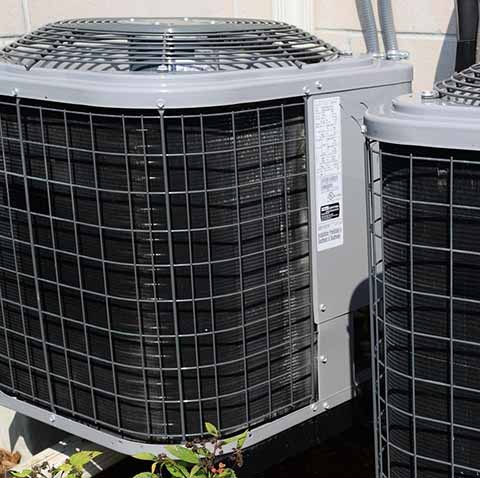
Age isn’t the only marker worth tracking. Efficiency fades well before a system fails outright. A 12-year-old unit can lose 20 to 30 percent of its original cooling capacity even if it still technically runs, which shows up as higher energy bills long before it shows up as a breakdown. You can check your system’s age from the manufacture date stamped on the nameplate, usually located on the outdoor condenser unit, if the original install paperwork isn’t on hand.
Regular annual AC maintenance is the single most important factor in extending the life of your cooling system. A yearly tune-up catches refrigerant loss, worn contactors, and dirty coils before they force the compressor to work harder than it should, which is exactly the kind of strain that shaves years off a unit’s life.
What Are the Signs That My AC Needs to Be Replaced?
Not every AC problem means replacement. But a few patterns point clearly in that direction:
- High repair cost: When a repair quote runs close to half the cost of a new system, replacement is almost always the better long-term value. A failing compressor or a cracked heat exchanger on an older unit often falls into this category.
- Frequent breakdowns: If you’re calling for repairs more than once a summer, the system is telling you it’s reached the end of its useful life. Each repair buys a little time, not a fix.
- Rising energy bills: A system that’s losing efficiency has to run longer to hit the same thermostat setting. If your utility bills have climbed while your usage habits haven’t changed, the AC is working harder than it should.
- R-22 Freon use: Systems built before 2010 often use R-22, a refrigerant phased out under federal regulation. It’s expensive, harder to source, and a strong sign the system itself is well past its prime.
- Uneven cooling or excess humidity: Rooms that never quite reach the set temperature, or a house that feels sticky even with the AC running, usually point to a system that’s undersized, failing, or both.
- Unusual noise or smell: Grinding, banging, or a musty odor from the vents often signals a mechanical or mold issue that’s more cost-effective to solve with a new system than a patch job.
What Most Guides Miss
Most articles on AC replacement stop at “watch your energy bill and repair costs.” What they leave out: a mismatched system size can shorten a brand-new unit’s life just as fast as age shortens an old one. An AC that’s too large for the home cycles on and off rapidly, which wears components faster and never runs long enough to properly dehumidify the air. One that’s too small runs constantly and overheats. A proper load calculation, not just a swap of the old tonnage for the same size, is what actually protects your investment for the next 10 to 15 years.
How Does A/C Control Replace the Systems?
A/C Control runs a dedicated 3-stage quality program for every AC installation and replacement.
The first stage happens during the initial estimate. A technician evaluates the existing system, electrical capacity, ductwork, and insulation to build a quote and an installation plan suited to your home’s specific layout, not a generic template.
The second stage is the installation itself. Technicians follow a detailed checklist to make sure every step meets code and our internal quality standards, from refrigerant charge to duct connections.
The third stage is unique to how we operate: a senior manager reviews and signs off on the completed work before the job is considered done. It’s an extra layer most companies skip, and it’s there because a new system is only as good as its installation.
Final Thoughts on AC Replacement
An aging AC doesn’t have to become an emergency. Watching for rising bills, repeated repairs, and outdated refrigerant gives you time to plan a replacement on your own schedule instead of during a heat wave breakdown. If your system is showing any of these signs, call 310-933-3990 and get one of our licensed technicians out for an honest evaluation before the next hot stretch hits.